TL;DR: An easement is a legal right for someone else to use part of your land for a specific purpose — power lines, a shared driveway, a storm drain, a sewer main. You still own the dirt, but you usually can't build a permanent structure on it. Easements stack on top of setbacks to shrink the area where a house can actually go. They show up on the title commitment and the recorded plat, not on the zoning map — which is exactly why so many buyers miss them.
The lot is never as big as the lot
Two parcels can be the same acreage, the same zoning, the same price — and have wildly different buildable area. The difference is often easements. A 0.4-acre lot with a 20-foot utility easement running diagonally across it, plus a 10-foot drainage easement along the rear, can lose a third of its developable footprint before a single setback is applied.
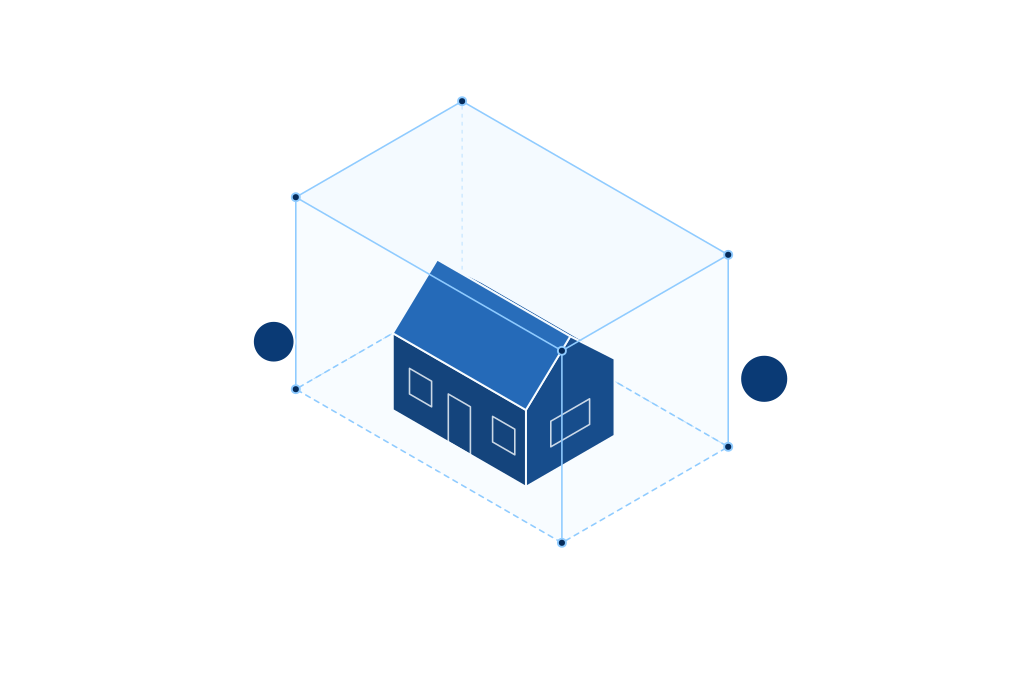
Buildability™ treats the build envelope as the real measure of a parcel, not the lot size on the listing. Easements are one of the three things — along with setbacks and floodplain — that carve the envelope down from the gross lot.
The four easements that matter most
| Type | Who holds it | What it usually prohibits |
|---|---|---|
| Utility | Power, water, gas, telecom | Permanent structures, large trees over buried lines |
| Access / ingress-egress | A neighbor or landlocked parcel | Blocking or building over the travel path |
| Drainage | The municipality or HOA | Anything that obstructs water flow or grading |
| Conservation | A land trust or the state | Most development, often permanently |
There are others — pipeline, slope, sight-triangle easements at corners — but these four account for the overwhelming majority of buildable-area surprises.
Utility easements
The most common. A utility company has the right to install and maintain lines across a strip of your property, typically 10–30 feet wide along a lot line or following an existing line. You generally can't put a permanent foundation over it, and the utility can dig it up without owing you for the landscaping.
Access easements
These create — or destroy — value. A shared-driveway easement lets a back lot reach the road across the front lot. If you're buying the back lot, that easement is what makes it buildable at all. If you're buying the front lot, it's a permanent strip you can't fence or build across.
Drainage easements
Often the sneakiest, because they can look like ordinary backyard. A recorded drainage easement reserves a path for stormwater — a swale, a culvert, a detention area. Build over it and you're not just violating the easement, you're potentially flooding your neighbor and inheriting the liability.
Conservation easements
The most permanent. A conservation easement — often tied to wetlands, a stream buffer, or a tax-incentive program — can remove development rights from part of a parcel forever. These overlap heavily with wetlands and environmental restrictions and rarely go away.
How to find them before you're committed
Easements live in three documents:
- The title commitment / title report. Schedule B-II lists recorded easements as exceptions to title. This is the single most important document for easement discovery — read it.
- The recorded plat or subdivision map. Easements are drawn as dashed lines with a width callout ("10' P.U.E." = public utility easement).
- The survey. An ALTA survey plots easements against the actual ground and the proposed structure. For any serious build, this is non-negotiable.
The trap: none of these are the zoning map. You can do a perfect zoning analysis and still get blindsided, because zoning governs use and easements govern who else has rights to the dirt. They're separate legal layers.
Reading the build envelope after easements
Here's the order of operations to find where a house can actually sit:
- Start with the gross lot.
- Subtract the front, side, and rear setbacks.
- Subtract any easements that prohibit structures.
- Subtract floodway / wetland buffers.
- What's left is the build envelope.
That final envelope is often well under the gross lot on a typical suburban parcel — and far less on a constrained one. A Buildability™ report shows the parcel with zoning and known easement-prone features in one view, so you can sanity-check the envelope before you ever order a survey.
Can you build on an easement anyway?
Sometimes — with permission. Many utility easements allow non-permanent improvements like fences, patios, or driveways (at your risk if they have to dig). Some easements can be relocated or vacated if the holder agrees and the municipality signs off, but that's a legal process measured in months, not a weekend project. Never assume; get it in writing from the easement holder.
Check any address free — see the parcel, zoning, and constraint layers in one Buildability™ report. No signup.