
- Due-diligence guides
- Radon
Free tool · No signup
Radon mitigation cost versus property value. The math before closing.
The county’s EPA radon zone in about 20 seconds, and what testing and mitigation cost there. Free for the live check; $99 for the Property Report.
Official EPA Map of Radon Zones · All 50 states · No card needed
The number you came for
Radon, by zone, in the numbers that decide the deal.
Mitigation and testing cost for each EPA zone. Ranges are national averages; a local contractor's quote is the binding number.
| Zone | What it means | Mitigation cost | Testing cost |
|---|---|---|---|
| Zone 1 | Highest risk (predicted avg >4 pCi/L) | $1,500 – $2,500 | $25 – $50 short-term |
| Zone 2 | Moderate risk (predicted avg 2–4 pCi/L) | $1,200 – $2,000 | $25 – $50 short-term |
| Zone 3 | Lowest risk (predicted avg <2 pCi/L) | $800 – $1,500 (rare) | $25 short-term (optional) |
Mitigation and testing costs are national averages for typical residential systems. No nationally representative estimate of the effect on resale exists; price your market with local sales. Buildability reads the county’s EPA zone.
Why the math pencils
Test, mitigate, document.
If the test reads high, mitigation is usually the cheaper path than a discount at sale. A system installed at buy, with a clean post-mitigation test in the file, answers the question before the next buyer asks it.
- Test before offer. A $25–$50 short-term test tells you whether the property is a mitigation candidate. In Zone 1 counties, write it into the contingency so the seller pays for the fix if it reads high.
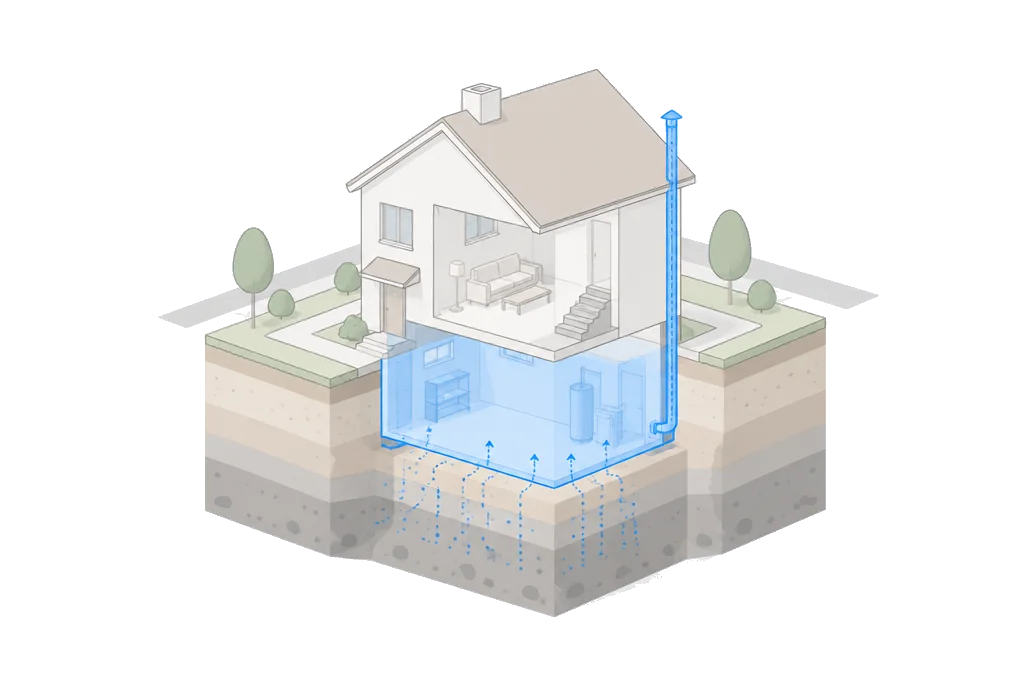
- Mitigate on the way in. Sub-slab depressurization is a one-day install by a certified contractor. The fan runs continuously. A post-mitigation test typically reads well under 2 pCi/L.
- Document for resale. Keep the pre-mitigation test, the installer’s certification, and the post-mitigation test in the file. They answer the buyer’s inspection question with a record instead of a negotiation.
- Zone 3 is not zero. EPA testing data shows some Zone 3 homes still read above 4 pCi/L. The zone predicts county averages, not individual houses. Testing is $25. The report’s zone read tells you what to expect; the physical test tells you what actually is.
How to check
Two moves. One before the offer, one before closing.
A free live check tells you the county’s EPA zone. A full report puts it in a written record beside the Score, with every other diligence factor in one file.
Live radon zone check
Free- EPA radon zone (1, 2 or 3) for the county
- No signup, no card
Full property report
$99- EPA county radon zone, cited, shown beside the Score as regional context
- Every other Buildability factor: flood, zoning, seismic, wildfire, soil, utilities
- Written record you can hand your inspector or lender
- Free re-runs, and change alerts once it is saved to a free account
Property Reports slide from $99 to $79 at volume. No record, no charge.
What buyers and investors actually ask about radon.
How much does radon mitigation actually cost?
A typical residential mitigation system (sub-slab depressurization for a slab-on-grade or basement) costs $1,200–$2,500 installed. Zone 1 properties trend higher because the local contractor base is more experienced and demand supports the price. Crawlspace-only or unusual foundations can run $2,500–$5,000. The system runs on a small fan that stays on continuously.
Does radon actually affect resale value?
Yes, but less than most buyers assume, and the effect is uneven. Paired-sale analyses in selected disclosure-state markets show measurable discounts on untreated homes with a documented high test result; no nationally representative estimate exists. With a mitigation system installed and a post-mitigation test showing <2 pCi/L, the discount disappears in most markets. Effect size tracks buyer awareness: stronger in states with a mandatory disclosure requirement (FL, IL, NJ, RI, others) than in states without one. Test your specific market before pricing this into an offer.
What is the difference between EPA Zone 1, 2, and 3?
Zone 1 (red): predicted average indoor radon greater than 4 pCi/L, the EPA action level. Zone 2 (orange): predicted average 2–4 pCi/L. Zone 3 (yellow): predicted average less than 2 pCi/L. These are county-level predictions based on geology and past testing; individual homes vary widely. A Zone 3 house can test high; a Zone 1 house can test clean. The zone tells you what to expect on average, not what the specific house will read.
How much does radon testing cost?
A short-term charcoal kit is $25–$50 including lab analysis, results in 48–96 hours after mailing. A long-term alpha-track test is $75–$200 and runs for 90 days, more accurate but slower. A professional continuous monitor (used by inspectors) is $150–$300 for a two-day rental read. Buy the short-term kit; if it reads over 4 pCi/L, buy the long-term to confirm before spending on mitigation.
Does mitigation pencil against the resale hit?
If the test reads high, mitigation is usually the cheaper path than a discount at sale; price your market with local sales. Skip it when the test comes back low, or when the property will not resell for many years.
Do I need to test before buying?
In Zone 1 and Zone 2, testing before closing is standard practice. The seller typically pays for mitigation if the test reads over 4 pCi/L, and buyers write the contingency into the offer. In Zone 3, testing is optional but cheap. A $25 test that could save $2,000 in surprise costs is worth doing regardless of zone.
How accurate is the EPA zone map?
Accurate as a predictor for county-level averages, imperfect for any individual house. Local geology (uranium content in bedrock, soil permeability), house construction (basement vs. slab, HVAC pressure), and even weather patterns at time of testing all move the reading. Buildability reads the county’s EPA zone, but the actual test on the property is the number that matters.
Is radon a disclosure issue in real estate transactions?
In some states (Florida, Illinois, New Jersey, Rhode Island, Kansas, Iowa, and others) sellers must disclose known radon test results or the property's radon zone. In non-disclosure states, most transactions still involve a radon contingency in the offer. The Buildability report timestamps the zone read so you have a defensible record either way.
Does Buildability work in my area?
Yes, all 50 states. EPA radon zone data covers every U.S. county, and Buildability queries it live for every parcel alongside the eight other factors that determine buildability.
Due-diligence guide series · 4 guides
More in the series.
Flood insurance due diligence
FEMA zones, floodway and the share of the lot in an SFHA, and insurance basics for land buyers.
Read the guideLot subdivision rules by state
Statewide pre-emption (CA/OR/WA) versus local zoning, plus the cost and timeline of a split.
Read the guideLiquefaction risk & soil analysis
USGS ground motion, USDA soils, and the foundation-strategy price ranges.
Read the guide
Read the zone. Do the math.
A $25 test is worth doing before you make the offer, not after.
Free live check · No card needed · EPA Zone data + 8 other factors