
For developers
Kill the bad sites before they cost you.
A 20-second verdict on any U.S. address, before you spend a dollar on diligence.
Free to score · No card, no signup · All 50 states
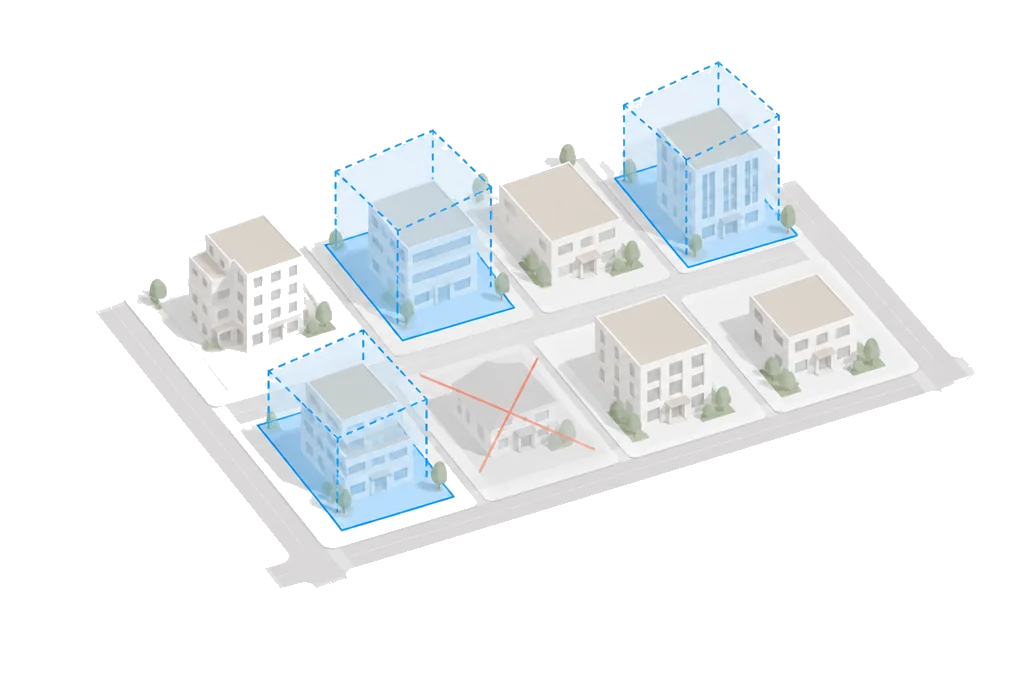
Feasibility, in pipeline order.
Screen wide, read the constraints, and spend real diligence only on the survivors.
- 01
Screen the whole pipeline.
Every address gets a 0–100 verdict in about 20 seconds, free. The bad sites die before they book a meeting.
- 02
Read the envelope.
Ask Geo for feasibility: max units, FAR, height, coverage, and the one risk that matters most on the parcel.
- 03
Stress-test the entitlement.
Run the scenario you actually plan to seek: upzone, utilities, hazards. See the before and after score and the unit delta.
- 04
Export the paper.
The survivors get a full report or IC memo as a PDF, every finding cited to the dataset it came from.
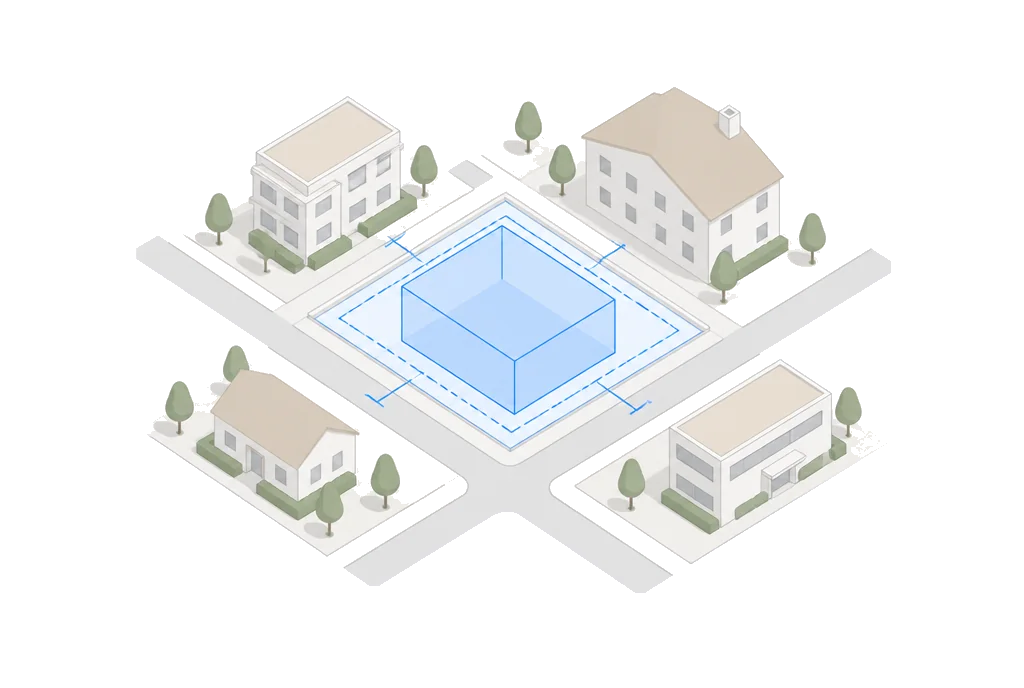
The fatal flaws surface first.
A severe finding caps the score before anything else is averaged in. You see the landmine, not a blended number.
A Special Flood Hazard Area (A/V zones) pulls the flood factor deep into the red. In Florida, flood carries 24% of the score.
Utility readiness is scored from real infrastructure proximity. In Texas it carries 22% of the score, the make-or-break question on edge parcels.
A very high hazard dominates its factor instead of averaging away. In California, seismic carries 16% and steep terrain 20%.
Weights and severity tiers are the published methodology. See how the Score is built
The economics
A screening memo for the price of lunch.
A feasibility memo runs $2,500–$5,000 and takes weeks. Most of it is the data. This is the data, cited, in 20 seconds.
$79 each at ten. The live Score stays free, so you only pay for the sites worth the paper.
No record, no charge: if the parcel record cannot be found, you are not billed.
New pipeline ·
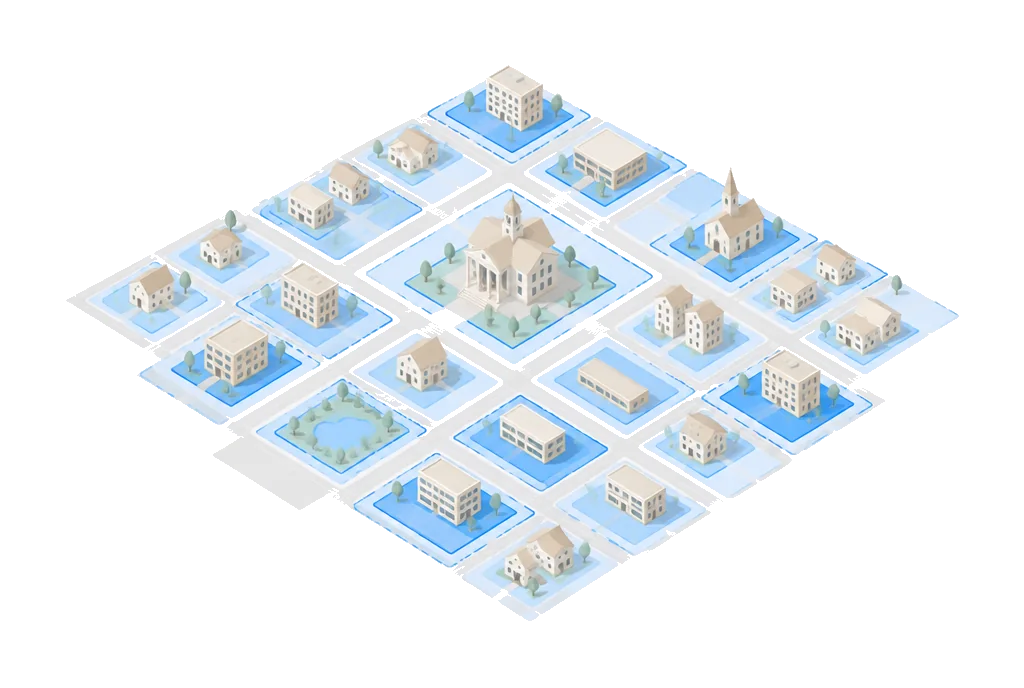
On October 1, roughly 1,245 cities publish their vacant land.
Public Law 119-101 requires every CDBG grantee to stand up a searchable database of the undeveloped land it owns. Buildability scores every parcel across the same nine factors the moment it is listed.
42 U.S.C. § 5304(b)(7)
Before you decide.
Does this replace my feasibility consultant?
It replaces the screening pass, not entitlement counsel. Kill the bad sites in seconds, then spend real diligence budget only on the ones that survive.
What is in the full report?
The parcel, its zoning envelope, all nine weighted factors, infrastructure, and market context, exportable as a PDF or IC memo with every finding cited to its source.
How current is the data?
Sources are queried live on every fresh run: 5 federal agencies plus parcel and zoning partners. Successful lookups are cached for up to 7 days. Nothing is ever guessed.
What does it cost?
The live Score and Geo chat are free. Full reports are $99 each, sliding to $79 at volume, and never expire. Each one licenses that parcel for a year.

Walk every site. Pay for the keepers.
The verdict takes about 20 seconds. The bad sites never reach your diligence budget.
Free to score · Full report $99 · All 50 states