
Free tool · No signup

Know what you can build. Before you buy the lot.

A source-cited feasibility screen across nine weighted factors, in about 20 seconds. Built for buyers, builders, and agents doing pre-offer diligence.

Free to score · No card · A consultant memo runs $2,500–$5,000 and takes weeks

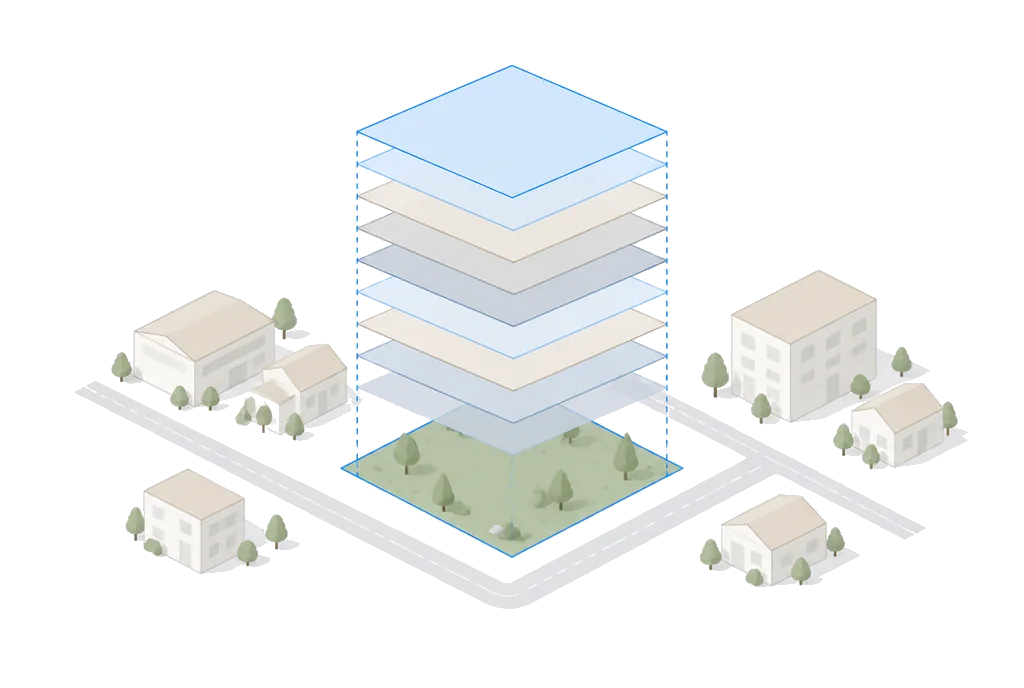
A raw lot with nine translucent data layers stacked above it.

Direct answer

What should I check before buying vacant land?

Before buying land, verify the intended use against official zoning and overlays, then investigate legal access, utilities, water and wastewater, flood and environmental constraints, terrain, soils, easements, title, and the required approval path. Use a preliminary screen to eliminate obvious mismatches, but keep inspection, survey, title, engineering, and jurisdiction verification contingencies in the purchase agreement.

· Verified guidance

How to verify it

  1. 01

    Define the intended project

    Buildability is conditional on what you intend to build, not the parcel alone. Sources: Revitalization-Ready Guide: Reuse Assessment, Buildability methodology

  2. 02

    Verify zoning and approvals

    Confirm permitted use, dimensional standards, overlays, and discretionary review. Sources: Revitalization-Ready Guide: Reuse Assessment, Buildability methodology

  3. 03

    Investigate site feasibility

    Check access, utilities, water, wastewater, flood, terrain, soils, wildfire, wetlands, and contamination. Sources: National Flood Hazard Layer, Web Soil Survey, EnviroAtlas, Buildability methodology

  4. 04

    Review legal and financial records

    Order title work and examine easements, deed restrictions, taxes, liens, and recorded approvals. Sources: Revitalization-Ready Guide: Reuse Assessment, Buildability methodology

  5. 05

    Use qualified professionals

    Escalate material unknowns to surveyors, engineers, attorneys, environmental professionals, and planning staff. Sources: Revitalization-Ready Guide: Reuse Assessment, Buildability methodology

Important limitation

A Buildability result does not replace a survey, title report, environmental assessment, engineering study, legal opinion, or jurisdiction decision. Verify material findings with the appropriate officials and professionals.

Official and primary sources

  1. National Flood Hazard Layer · FEMA: Official flood-zone, floodway, and flood-elevation screening.
  2. Web Soil Survey · USDA NRCS: Official soil properties and building-site suitability screening.
  3. EnviroAtlas · U.S. EPA: Environmental geospatial screening context for site due diligence.
  4. Revitalization-Ready Guide: Reuse Assessment · U.S. EPA: Official guidance distinguishing environmental and real-estate due diligence, including zoning, liens, encroachments, title searches, engineers, attorneys, and environmental professionals.
  5. Buildability methodology · Buildability: Preliminary project, zoning, site, legal-record, professional-review, source, and confidence workflow.
A clearer first pass on land due diligence.

Use the preliminary screen to decide which issues need official or professional verification.

  1. 01

    Enter the parcel address.

    Raw land, infill, or an unincorporated parcel. Any address, pin, or parcel number.

  2. 02

    Get a preliminary feasibility scan.

    Available evidence is organized across nine weighted factors: zoning, flood, seismic, soil, radon, wildfire, utilities, terrain, and lot geometry.

  3. 03

    Decide: go, caution, or walk.

    A plain-English verdict, the flagged risks, and the questions to ask the seller before you commit.

Why check first

Four things land buyers miss until it is too late.

Each one can change feasibility, and each should be investigated before closing.

You closed on a lot you cannot legally build on.

Setbacks, overlays, easements, and prior approvals can materially reduce the usable building area on a parcel that looks suitable at first glance.

The utility hookup quote lands after closing.

Mapped water, sewer, and power availability may be incomplete. Confirm capacity, connection points, extension requirements, and provider terms before closing.

The approval path differs across jurisdiction lines.

Similar zoning labels can follow different application, review, hearing, and approval processes. Permit timing depends on project type, review path, and the governing jurisdiction.

Undisclosed wetland or flood designation.

Official flood and environmental screens can reveal constraints a listing does not describe. Site-specific verification may still be required.

Parcel area alone does not determine the buildable envelope. Setbacks, overlays, easements, access, and site constraints all shrink it.

Not legal advice. Not a permit guarantee. An early feasibility signal built from public data, so you walk into due diligence asking the right questions instead of discovering the problem after closing.

Data sources: FEMA · EPA · USGS · USACE · county parcel layers · municipal zoning ordinances

Before you decide.

What is land due diligence?

It is the investigation performed before acquiring or developing land to test whether the intended project is legally, physically, financially, and operationally feasible.

What should I check before buying vacant land?

Check zoning and overlays, legal access, water and wastewater, utilities, flood and environmental constraints, terrain, soils, easements, title, taxes, recorded approvals, and the permit or entitlement path for the intended use.

How is this different from a survey or title report?

A survey addresses boundaries and mapped site conditions; title work addresses ownership and recorded interests. Buildability is a preliminary regulatory and site screen. These products answer different questions and may all be necessary.

Can I use this for rural or unincorporated land?

Yes for a preliminary screen, but county authority, legal access, wells, septic, utility availability, fire access, and sparse public mapping often create additional verification work.

Is this a permit or legal opinion?

No. Keep appropriate purchase contingencies and use planning staff, surveyors, engineers, environmental professionals, title professionals, and land-use counsel for material unresolved issues.

Screen the lot before you sign.

Nine weighted factors, each with its source. Local depth varies by source and jurisdiction.

Free to score · Full report $99 · Preliminary results